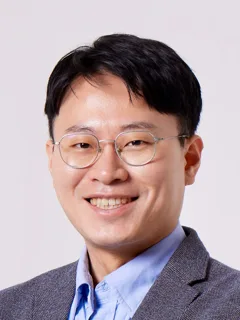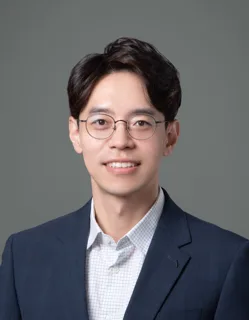
김동우 교수 사진

포항공과대학교인공지능대학원, 컴퓨터공학과최근 탑티어 활발

Machine Learning Lab

김동우 전임교수 (Dongwoo Kim)

탑티어 논문
54
전체 논문
66
구성원
33
연구실 소개

이 연구실은 LLM의 추론·계획·코드 생성과 요약을 연구하며, 생성 결과를 제어하고 신뢰성을 높이는 방법을 다룹니다. 비전-언어 모델과 멀티모달 추론, 그래프 신경망의 표현 학습과 일반화, 연합학습·선호 학습·능동학습도 연구 주제입니다. 검색증강 질의응답의 출처 신뢰도와 개인화, 신약 설계·음성 인식 등 여러 응용 문제도 다룹니다.

AI가 최신 논문을 바탕으로 생성한 연구실 소개예요

연구실 홈페이지의 소개

Large Language Models (LLMs) have enabled robots to autonomously generate and refine action plans and control programs. However, existing approaches often suffer from unreliable knowledge accumulated through experience, costly trial-and-error, and excessive LLM inference overhead. We aim to develop robotic planning agents that continuously improve from their own experiences while minimizing computational costs. Our research focuses on (1) learning from successes and failures while correcting erroneous knowledge, (2) improving token efficiency in failure analysis and plan code generation, and (3) minimizing runtime latency to enable fast and responsive execution when deployed on real-world robots. Through these efforts, we seek to build robust and efficient robotic agents that autonomously evolve their planning capabilities across diverse tasks and environments. Finding source or binary code vulnerabilities is a long-standing and never-ending problem. The recent advance in LLMs potentially provides clues to further advance the current code vulnerability discovery performance. In this project, we will explore the potentials of LLMs in finding code vulnerabilities. Large language model (LLM) agents, e.g., Claude code and Codex, now resolve real-world software engineering (SWE) issues, but at a high cost: multi-agent SWE systems repeatedly re-explore the same repository, spending a large amount of tokens, latency, and energy on redundant search. In this work, we study how to make SWE agents efficient without sacrificing their issue-solving ability, e.g., by sharing retrieved context across agents and turns, designing persistent sub-agents, and rethinking the agent-computer interface. Reinforcement Learning from Human Feedback (RLHF) allows models to generate outputs aligned

원문 보기
컨택 준비
[email protected]

홈페이지에서 읽은 구성원

  • 박사후연구원 2명
  • 박사과정 7명
  • 석박통합과정 24명
  • 졸업생 31명
컨택 메일 쓰는 법
연도별 논문

정보가 틀렸거나 삭제를 원하시면 [email protected]로 알려 주세요.

비슷한 연구를 하는 연구실

  • POSTECH 옥정슬 교수

    탑티어 54전체 65구성원 33

    대규모 언어 모델생성 모델·디퓨전
  • POSTECH 박상돈 교수

    탑티어 52전체 65구성원 33

    대규모 언어 모델그래프 학습
  • HLILab

    성균관대 박진영 교수

    탑티어 7전체 17구성원 –

    대규모 언어 모델추천·검색
  • POSTECH 전광성 교수

    탑티어 12전체 19구성원 8

    학습 이론·최적화강화학습
  • 고려대 이병준 교수

    탑티어 17전체 25구성원 19

    대규모 언어 모델강화학습
  • 서울대 김태섭 교수모집 안내

    탑티어 23전체 26구성원 26

    대규모 언어 모델멀티모달