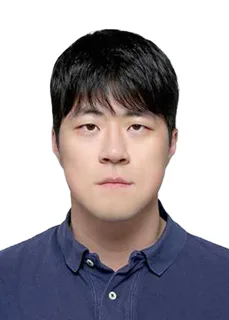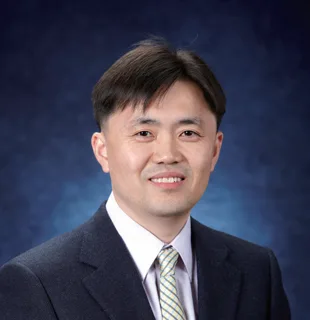
서진욱 교수 사진

서울대학교컴퓨터공학부, AI대학원최근 탑티어 활발

휴먼-컴퓨터 인터액션 연구실

서진욱 교수, 컴퓨터연구소장 (Jinwook Seo)

탑티어 논문
24
전체 논문
45
구성원
36
연구실 소개

이 연구실은 고차원 데이터의 차원 축소와 군집 결과를 신뢰성 있게 해석하고, 그래프·네트워크·문헌·의료 데이터 등을 탐색하는 시각 분석 기법과 도구를 연구합니다. 또한 LLM을 활용한 문헌 검토와 차트 해석, UI 생성 및 개인화, 학습자와 사용자의 인터페이스 상호작용을 다룹니다. 이와 함께 Wi-Fi Aware와 UWB 기반 실내 위치 추정 및 비접촉 게이트·결제 시스템을 연구합니다.

AI가 최신 논문을 바탕으로 생성한 연구실 소개예요

연구실 홈페이지의 소개

Large Vision-Language Models (LVLMs) can achieve high scores on visualization literacy tests, but accuracy alone does not reveal the source of their answers. We address this by separating visual correctness, which reflects what the chart shows, from factual correctness, which reflects real-world facts. Evaluating responses along two dimensions reveals patterns that a single accuracy score cannot capture. We introduce the Counterfactual Visualization Literacy Assessment Test (CVLAT), a benchmark of 48 questions with charts that deliberately contradict widely known facts. This allows us to examine how models prioritize visual evidence and prior knowledge when the two disagree. We also assess chart-reading ability and factual knowledge separately to distinguish source preferences from differences in capability. Swapping the population values for China and South Korea separates the answer supported by the chart from the answer supported by factual knowledge. Across three experiments, we evaluated 15 proprietary and open-source LVLMs, alongside a 30-participant human baseline on CVLAT. High accuracy does not guarantee faithful chart reading. Strong performance on standard tests can reflect factual recall rather than interpretation of the chart. Models prioritize different sources. Some models favor visual evidence, while others favor factual knowledge. Human participants predominantly followed the chart, even when it contradicted familiar facts. Prompts can shift these priorities. Their effects vary across models and often differ between visual-priority and factual-priority instructions. Strong chart-reading ability does not predict how responsive a model is to such prompts. Our findings highlight the importance of evaluating not just whether models answer correctly, but als

원문 보기
연구 분야

인간-컴퓨터 상호작용 · 인터랙션 디자인 · 사용자 인터페이스 디자인 · 정보 시각화 · 시각 분석 · 생의학 정보학 · Human-Computer Interaction · Human-AI Interaction · Visualization · Interaction Design · User Interface Design · Information Visualization · Visual Analytics · Biomedical Informatics

졸업생 진로

기업 32명

삼성전자 9 · 엔씨소프트 2 · 42 Company 2 · TwelveLabs 2 · 네이버 1 · 코스콤 1 · 티맥스소프트 1 · 하이퍼커넥트 1 외 13곳

학계 10명

Carnegie Mellon University 2 · 광운대학교 1 · 서울대학교 1 · 숭실대학교 1 · 성균관대학교 1 · Aarhus University 1 · Harvard University 1 · HKUST 1 외 1곳

연구기관 2명

분당서울대학교병원 1 · Korea Air Force Academy 1

기타 1명

MADI 1

연구실 홈페이지에 진로가 적힌 졸업생 45명을 AI가 집계했어요. 적히지 않은 졸업생은 빠져 있고, 지금 소속과 다를 수 있어요. 원문 보기

컨택 준비
[email protected]

홈페이지에서 읽은 구성원

  • 박사후연구원 1명
  • 박사과정 24명
  • 학부 인턴 4명
  • 구성원 7명
  • 졸업생 64명
컨택 메일 쓰는 법
연도별 논문

정보가 틀렸거나 삭제를 원하시면 [email protected]로 알려 주세요.

비슷한 연구를 하는 연구실