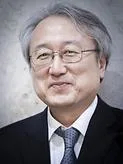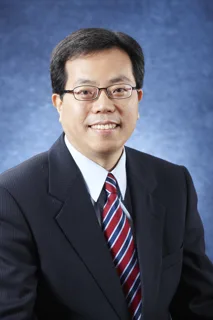
장병탁 교수 사진

서울대학교컴퓨터공학부, AI대학원최근 탑티어 활발

바이오지능 연구실

장병탁 교수 (Byoung-Tak Zhang)

탑티어 논문
30
전체 논문
49
구성원
–
연구실 소개

이 연구실은 LiDAR·포인트 클라우드·RGB-D 영상 등을 활용해 3차원 공간과 객체를 인식하고, 장면의 구조와 물체의 조작 가능성을 표현하는 방법을 연구합니다. 또한 강화학습과 모방학습, 계층적 계획을 통해 로봇이 이동하고 물체를 다루며 지시를 수행하도록 하는 방법을 다룹니다. 영상의 시간적 이해와 생성, 분포 밖 상황에 대한 대응, 학습 모델의 일반화와 망각도 연구 주제입니다.

AI가 최신 논문을 바탕으로 생성한 연구실 소개예요

연구실 홈페이지의 소개

How does the biological mind work? How does the brain build a model of the world to instantly and robustly act on it? What kinds of processing and organizational mechanisms allow the brain to learn so rapidly, flexibly, and continuously in a noisy, dynamic, and changing environment? How can we build smart machines that perceive, think, act, and learn like the human brain and mind? In the Biointelligence Lab and the Cognitive Robotics and ArtificialIntelligence Center (CRAIC) we pursue these questions using diverse methods of cognitive modeling, computational neuroscience, robotics, and computer science. We build robotic surrogates by “cloning” the embodied and situated mind using wearable sensors, such as smart glasses, watches, brain scanners, body sensors, and mobile devices. We collect human activity data by long-term life-tracking in the real world. Based on these observational data, we reverse-engineer the brain architecture by exploring the plausible neurocognitive models that best explain the mind in working. We also use videos and cartoons to study how the cognitive brain constructs episodic memory and mental imagery from a long sequence of context-rich events while watching dramas and movies. Our current efforts center around the deep, recurrent, and sparse hypernetwork architectures and learning algorithms that self-organize their structures instantly, incrementally, and continuously in a self-supervised way by perception-action cycle. The ultimate goal is to discover a large-scale, neurocognitive computational model of the brain that autonomously develops or evolves into human-level machine intelligence in lifelong interactions with the environment.

원문 보기
연구 분야

Computer Vision · Machine Learning · Natural Language Processing · 인간수준 AI · 학습과 추론 · 인지로봇 · 뇌정보처리 모델링에 의한 기계학습 기반 사용자 의도 예측기술 · 지능형 추천 서비스를 위한 인지기반 기계학습 및 추론 기술 · 기계학습 기반 멀티모달 복합 정보 추출 및 추천기술 · 모바일 라이프로그를 이용한 상황 문맥 상에서의 행동 파악 기술

졸업생 진로

기업 74명

네이버 11 · 삼성전자 7 · 크래프톤 4 · Surromind 4 · 카카오 3 · 현대오토에버 2 · 현대자동차그룹 2 · Ludo Robotics 2 외 35곳

학계 20명

숭실대학교 2 · 한양대학교 2 · Columbia University 2 · University College London 2 · 국방대학교 1 · 백석대학교 1 · 부산대학교 1 · 아주대학교 1 외 8곳

연구기관 14명

서울대학교 4 · LG AI Research 3 · 특허청 1 · 대통령비서실 1 · 한국과학기술연구원 1 · 한국전자통신연구원 1 · 국가인공지능전략위원회 1 · Boston Children’s Hospital 1 외 1곳

진학 13명

한국과학기술원 3 · University of Michigan 2 · University of Pennsylvania 2 · Georgia Institute of Technology 1 · MIT 1 · UIUC 1 · Université de Montréal 1 · University of California, Berkeley 1 외 1곳

연구실 홈페이지에 진로가 적힌 졸업생 121명을 AI가 집계했어요. 적히지 않은 졸업생은 빠져 있고, 지금 소속과 다를 수 있어요. 원문 보기

연도별 논문

정보가 틀렸거나 삭제를 원하시면 [email protected]로 알려 주세요.

비슷한 연구를 하는 연구실