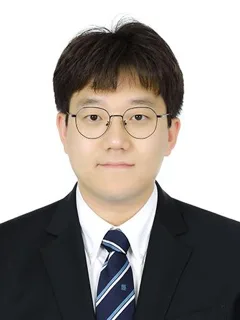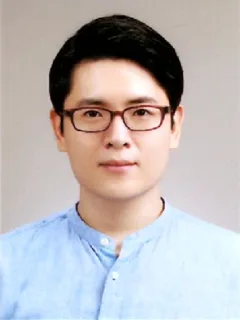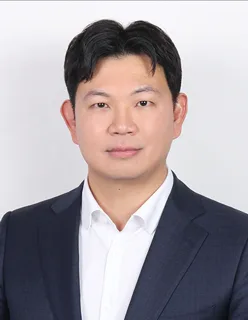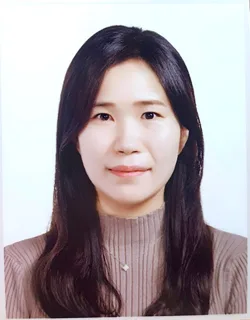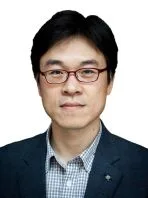
윤국진 교수 사진

KAIST김재철AI대학원최근 탑티어 활발

KAIST Visual Intelligence Lab

윤국진 기계공학과 교수 (Kuk-Jin Yoon)

홈페이지의 모집 안내

“We are looking for passionate students and researchers to join our journey.”

원문에서 확인하기
탑티어 논문
79
전체 논문
92
구성원
33
연구실 소개

이 연구실은 자율주행 환경에서 카메라·LiDAR·레이더·이벤트 카메라를 활용한 3D 인식과 객체 추적, 주행 계획을 연구합니다. 또한 LiDAR 의미 분할의 도메인 일반화와 악천후·손상 조건에서의 강건성, 이벤트 카메라 기반 영상 복원과 3D 추정을 다룹니다. 이와 함께 Gaussian Splatting과 확산 모델을 활용한 3D·4D 장면 재구성 및 생성, 멀티태스크 학습과 비전-언어 표현 정렬을 연구합니다.

AI가 최신 논문을 바탕으로 생성한 연구실 소개예요

연구실 홈페이지의 소개

End-to-end autonomous driving learns a direct mapping from raw sensor inputs to driving actions using a single neural network or pipeline. By unifying perception, prediction, and planning into one model, it reduces system complexity and enables consistent, real-time decision-making. This approach forms a promising path toward scalable and robust driving intelligence. Vision foundation models are large-scale models trained on vast and diverse datasets, capable of adapting to many downstream visual tasks with minimal supervision. They support prompt-based interactions and generalize well across domains, reducing the need for task-specific training. These models provide a powerful backbone for modern vision systems across research and industry. Novel sensors provide unique forms of visual information beyond conventional RGB cameras, enabling perception in challenging conditions. Event cameras, 360° panoramic cameras, and other non-traditional sensors offer high temporal resolution, wide field of view, or high dynamic range. These sensors open new possibilities for robust perception in fast, bright, or complex environments. Event cameras asynchronously capture changes in brightness with microsecond latency, avoiding motion blur and handling extreme lighting. They are ideal for high-speed motion analysis, HDR imaging, and continuous-time perception. This sensor enables new algorithmic paradigms that differ fundamentally from frame-based vision. Multi-modal learning integrates complementary information from different sensor modalities to achieve more reliable and complete perception. By combining visual, geometric, semantic, and linguistic inputs, models can interpret complex real-world environments more effectively. This approach improves robustness under noise, occlusion, a

원문 보기
연도별 논문

정보가 틀렸거나 삭제를 원하시면 [email protected]로 알려 주세요.

비슷한 연구를 하는 연구실