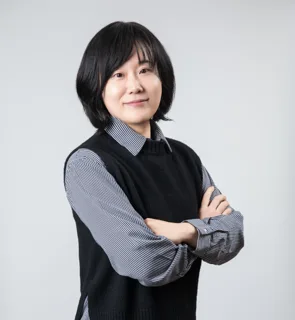
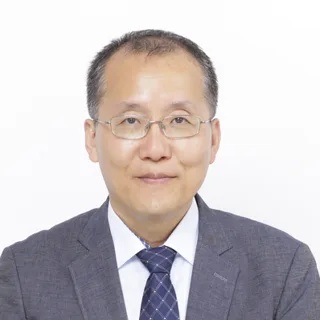
박기영 교수 사진

KAIST화학과

Transition Metal Catalysis & Mechanism

박기영 부교수 (Kiyoung Park)

연구실 소개

이 연구실은 전이금속 촉매 반응의 활성과 선택성에 영향을 주는 금속 중심의 전자·기하 구조를 규명하고, 촉매 중간체와 반응 경로를 분석해 반응 메커니즘을 연구합니다. 자기 원편광 이색성(MCD), 전자상자성공명(EPR), 핵공명 진동분광법(NRVS) 등의 분광법과 밀도범함수이론(DFT) 계산을 활용합니다.

AI가 연구실 홈페이지를 바탕으로 생성한 연구실 소개예요

연구실 홈페이지의 소개

Transition metals serve as active sites for a wide range of catalysis. About 1/3 of proteins are metalloproteins, and numerous organic syntheses nowadays require organometallic catalysts. In these reactions, the transition metal centers often determine the activity and selectivity of catalysis. Thus, characterizing the geometric and electronic structure of the metal center is a key to understanding catalytic mechanism and developing optimized catalysts. To define the mechanisms of transition-metal-based catalyses, we utilize various spectroscopic techniques and computation. While conventional techniques such as NMR and IR are useful to analyze organic substrate and product, we employ techniques that allow a direct probe on the transition metal centers. This way we determine catalyst-based reaction kinetics and characterize catalytic intermediates. Magnetic circular dichroism (MCD) spectroscopy collects differential absorption of left- and right-circularly polarized light in the presence of a strong magnetic field (up to 7 T). This condition allows metal-based electronic transitions, which are often forbidden or low resolution in the conventional electronic absorption spectroscopy, and magnetic properties such as exchange coupling and zero-field splitting parameters can be measured. Using this information, we can determine the coordination structure of the metal center in solution and also monitor its variation over the course of a catalytic reaction. We understand reactivity based on frontier molecular orbitals. Based on catalyst-based kinetics, key intermediates are time-isolated and their electronic and geometric structures are determined. Reaction coordinate that involves these intermediates is constructed using quantum computations. Frontier molecular orbital intera

원문 보기
연구 분야

Transition-metal-containing catalysts · Electronic and geometric structures of reaction intermediates · Magnetic Circular Dichroism · Electron Paramagnetic Resonance · Nuclear Resonance Vibrational Spectroscopy · Density Functional Theory computations

졸업생 진로

기업 1명

삼성전자 1

학계 2명

덕성여자대학교 1 · D. C. B. Girls' College 1

연구실 홈페이지에 진로가 적힌 졸업생 3명을 AI가 집계했어요. 적히지 않은 졸업생은 빠져 있고, 지금 소속과 다를 수 있어요. 원문 보기

컨택 준비
[email protected]

홈페이지에서 읽은 구성원

  • 박사후연구원 3명
  • 박사과정 2명
  • 구성원 1명
  • 졸업생 2명
컨택 메일 쓰는 법

정보가 틀렸거나 삭제를 원하시면 [email protected]로 알려 주세요.

비슷한 연구를 하는 연구실