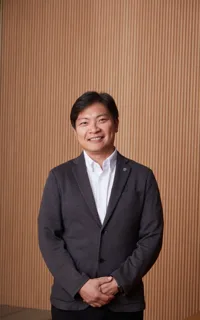
이 연구실은 sparse Gaussian process 기반 머신러닝 포텐셜과 베이지안 모델을 개발해 거시적 물질계의 양자적 특성을 연구하고, 나노·마이크로미터 규모의 양자 시뮬레이션을 수행합니다. 또한 베이지안 AI와 계산·실험 데이터를 활용해 촉매, 태양전지, 금속유기골격체 등 에너지 소재의 합성 가능성과 안정성을 예측합니다. 제일원리 계산으로 태양전지, 발광 다이오드, 촉매, 배터리를 연구하고, 물질의 결정화·상평형도·동역학과 복잡한 계면의 구조 및 반응 경로를 살펴봅니다.
AI가 연구실 홈페이지를 바탕으로 생성한 연구실 소개예요
연구실 홈페이지의 소개
We develop sparse Gaussian process ML potential and Bayesian sampling models. Based on the ML potential, we aim to overcome current quantum computational limitations and understand the quantum properties of open macroscopic material systems and provide scientific insights. By leveraging machine learning potential, we strive to perform quantum simulations at nano/micrometer scales, enabling simulations by several orders of magnitude faster and larger than before. Our quantum mechanical machine learning models are highly universal and can be applied to various materials, opening up research opportunities in physics, chemistry, materials, energy, and biology. We are developing AI models to integrate with experimental synthesis procedures, using Bayesian AI models to predict synthesizability and stability in both theory and experiment. These AI models are built on high-throughput computational and experimental data to predict and synthesize novel energy materials such as catalysts, solar cells, and metal-organic frameworks. Our approach aims to revolutionize the way we discover and create innovative energy solutions. Our research focuses on materials theory for fundamental insights and deep understanding, including first-principles studies on solar cells, light-emitting diodes, catalysts, and batteries. We investigate crystallization, phase diagrams, and kinetics of materials to gain a comprehensive understanding of their properties. Additionally, we explore structure and reaction pathway searches for complex interfaces, enabling more efficient and effective material development. We develope a highly-scalable universal sparse Gaussian process regression (SGPR) machine learning potential for all known compounds. The ultimate objective is to refine the SGPR methods for direct
에너지 재료 이론 · 양자화학 · 과학을 위한 인공지능 · 양자컴퓨팅
정보가 틀렸거나 삭제를 원하시면 [email protected]로 알려 주세요.
| 연구실 | 대학 | 주요 주제 | 구성원 | 비교 |
|---|---|---|---|---|
Computation and AI for Materials (CAIM) Lab김동훈 교수 | KAIST | 이차전지·배터리촉매·수소·연료전지 | 5 | |
소재 인공지능 플랫폼 연구실강영훈 교수신생 랩 | 성균관대 | 계산 재료·화학 | 1 | |
HANS Lab한병찬 교수 | 연세대 | 계산 재료·화학이차전지·배터리촉매·수소·연료전지 | 1 | |
소재 AI 모델링조성범 교수 | 성균관대 | – | ||
Nano Materials Simulation & Fabrication Lab강정구 교수 | KAIST | 촉매·수소·연료전지이차전지·배터리 | 5 | |
Materials Theory Group손알로이시우스 교수모집 안내 | 연세대 | 계산 재료·화학 | 12 |