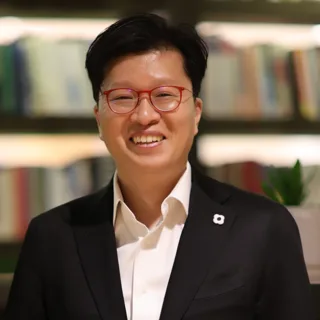
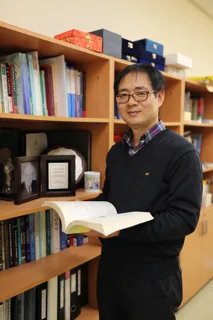
김종승 교수 사진

고려대학교화학과

고려대학교 화학과 초분자나노유기재료연구실

김종승 교수 (Jong Seung Kim)

연구실 소개

이 연구실은 생체 내 특정 세포 소기관에서 활성화되는 광레독스 촉매를 개발하고, 이를 이용해 미토콘드리아의 NADH 산화와 전자전달계를 조절하는 연구를 합니다. 저산소 조건의 암세포에서 광촉매성 세포사멸을 유도해 종양 치료에 적용하는 연구도 합니다.

AI가 연구실 홈페이지를 바탕으로 생성한 연구실 소개예요

연구실 홈페이지의 소개

The revolutionary impact of photoredox catalytic processes has ignited novel avenues for exploration, empowering us to delve into nature in unprecedented ways and to pioneer innovative biotechnologies for therapy and diagnosis. However, integrating artificial photoredox catalysis into living systems presents significant challenges, primarily due to concerns over low targetability, low compatibility with complex biological environments, and the safety risks associated with photocatalyst toxicity. To address these challenges, herein, we present a novel bioorthogonally activatable photoredox catalysis approach. In this approach, potent photocatalyst selection via atom replacement of the rhodamine core yielded the bioorthogonally activatable photocatalyst (PC-Tz). The introduction of 1,2,4,5-tetrazine quenched its photocatalytic properties, which were restored upon an intracellular inverse electron-demand Diels–Alder (iEDDA) reaction with trans-cyclooctene (TCO) localized in mitochondria. This reaction led to remarkable photocatalytic oxidation of nicotinamide adenine dinucleotide (NADH), effectively manipulating the mitochondrial electron transport chain (ETC) under hypoxic conditions in cancer cells. Additionally, photocatalytic pyroptotic cell death was observed through a caspase-3/gasdermin E (GSDME) pathway, achieving notable antitumor efficacy and adenosine triphosphate (ATP) reduction in tumor cells. To the best of our knowledge, this represents the first example of bioorthogonally activatable photoredox catalysis, opening new avenues for chemists to spatiotemporally control activity in specific cell organelles without disrupting other native biological processes. Amyloid-β (Aβ) oligomers are implicated in the onset of Alzheimer’s disease (AD). Herein, quinoline-deri

원문 보기
연구 분야

Organic · Biological · Nano & Materials

정보가 틀렸거나 삭제를 원하시면 [email protected]로 알려 주세요.

비슷한 연구를 하는 연구실