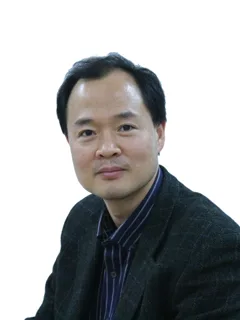
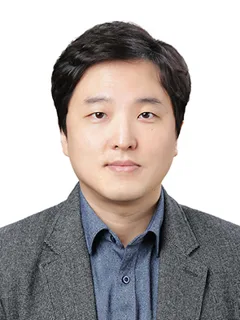
최양규 교수 사진

KAIST전기및전자공학부

Nano-Oriented Bio-Electronics Lab

최양규 교수 (KT 석좌교수) (Yang-Kyu Choi)

연구실 소개

이 연구실은 MOSFET, biristor, memristor 기반 인공 뉴런·시냅스 소자와 이를 활용한 심층 신경망·스파이킹 신경망 등 뉴로모픽 시스템을 연구합니다. 실리콘 기반 나노 CMOS 소자와 비휘발성 메모리, DRAM과 비휘발성 메모리 기능을 결합한 단일 트랜지스터 메모리, CMOS 소자의 전기적·열적 특성도 다룹니다. 또한 복사·열·기계 에너지를 수집하는 에너지 하베스팅 기술을 연구합니다.

AI가 연구실 홈페이지를 바탕으로 생성한 연구실 소개예요

연구실 홈페이지의 소개

Neuromorphic hardware is a sort of artificial intelligence (AI) hardware that can implement AI functions with ultra-low power by mimicking the human brain that consumes only 20 W. Implementing neuromorphic hardware requires artificial neurons and synapses that can mimic the functions of biological neural networks. We are conducting research on neuron devices and synaptic devices based on various structures (MOSFET, biristor, memristor) and materials (ferroelectric, charge trap layer, electrolyte, RRAM), and neuromorphic systems (deep neural network, spiking neural network) using them. World smallest sub-5nm all-around gate FinFET with 3nm silicon-fin width were fabricated and reported (VLSI'06). These results show feasibility to continue the Moore's law beyond the sub-5nm using the silicon-based material. World smallest sub-10nm nanowire SONOS Non-volatile memory were were demonstrated (VLSI'07). Furthermore, by combining a floating body and oxide/nitride/oxide stacked gate dielectric, the high speed DRAM operation and the non-volatile memory operation is realized in the single transistor (URAM, unified-RAM). Especially, the DRAM operation is feasible without a cell capacitor by using the floating body capacitor. According to an end-users' demand, one can allocate each operation to utilize each advantageous function. The electrical properties and thermal behaviors of CMOS devices are analyzed through simulation and modeling. Energy harvesting technology is related to scavenge electrical energy from ambient environment such as radiational, thermal and mechanical energy. Since an energy harvester can provide green and sustainable electrical energy, it becomes a strong candidate as an alternative energy source for sensors in Internet of Things (IoT). Especially, triboelect

원문 보기
연구 분야

Security · Integrated Circuits & Semiconductor Systems · Semiconductor Devices & Nanotechnology · Biomedical Engineering · Nano CMOS · Nanofabrication Technology

졸업생 진로

기업 71명

삼성전자 30 · SK하이닉스 27 · Apple 3 · Intel 3 · 미래에셋증권 1 · Fairchild 1 · IBM 1 · Junctions 1 외 4곳

학계 13명

한밭대학교 2 · 경북대학교 1 · 경희대학교 1 · 국민대학교 1 · 서울대학교 1 · 세종대학교 1 · 전북대학교 1 · 충남대학교 1 외 4곳

연구기관 2명

한국과학기술연구원 1 · NASA 1

진학 4명

University of Michigan 2 · 한국과학기술원 1 · The University of New South Wales 1

연구실 홈페이지에 진로가 적힌 졸업생 90명을 AI가 집계했어요. 적히지 않은 졸업생은 빠져 있고, 지금 소속과 다를 수 있어요. 원문 보기

컨택 준비
[email protected]

홈페이지에서 읽은 구성원

  • 박사과정 11명
  • 졸업생 85명
컨택 메일 쓰는 법

정보가 틀렸거나 삭제를 원하시면 [email protected]로 알려 주세요.

비슷한 연구를 하는 연구실