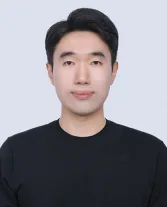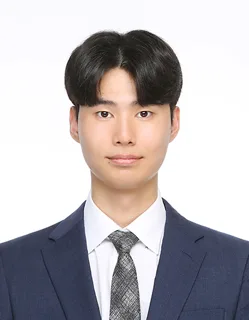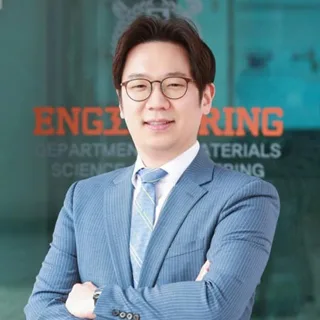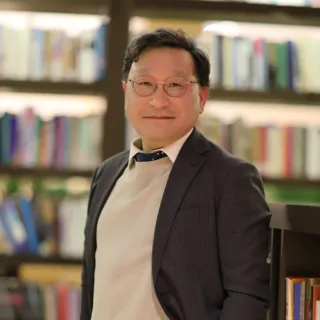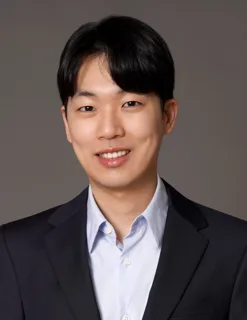
서동화 교수 사진

KAIST신소재공학과

Computational Materials Design & Discovery Lab

서동화 교수 (Dong-Hwa Seo)

홈페이지의 모집 안내

“Prof. Dong-Hwa Seo is recruiting two postdoctoral fellows through the UNIST InnoCORE program in AI-Driven Hydrogen Technology. The fellows will be affiliated with and conduct their research at KAIST in Daejeon.”

원문에서 확인하기
연구실 소개

이 연구실은 리튬이온배터리의 전극과 고체전해질 등 에너지 저장 소재를 개발하고, 원자 수준의 구조와 반응 메커니즘이 이온 수송, 에너지 저장, 소재 열화에 미치는 영향을 연구합니다. 제1원리 계산과 원자 시뮬레이션으로 소재의 안정성·전자구조·반응 메커니즘을 분석하고, 머신러닝과 자율실험실을 활용해 소재를 탐색하고 물성을 예측합니다. 예측 결과는 합성 및 측정 실험으로 검증합니다.

AI가 연구실 홈페이지를 바탕으로 생성한 연구실 소개예요

연구실 홈페이지의 소개

We combine experimental and computational methods to understand materials properties and reaction mechanisms at the atomic scale and develop new energy storage materials, including electrodes and solid electrolytes for rechargeable batteries. First-principles calculations and density functional theory (DFT) connect atomic and electronic structures with ion transport, electrochemical reactions and degradation. Synthesis, characterization and cell testing help us discover new materials and validate predictions. We also combine artificial intelligence (AI), machine learning (ML) and robotics in self-driving laboratories to accelerate battery materials development. These platforms collect large experimental datasets, search for promising materials, optimize compositions and synthesis conditions, and test predictions from AI and atomistic modeling through synthesis and measurements. Keywords: lithium-ion batteries, electrodes, solid electrolytes, first-principles calculations, density functional theory (DFT), artificial intelligence, machine learning, self-driving lab. Discovering new electrode and electrolyte materials and understanding how local structure, synthesis pathways and reaction mechanisms govern ion transport, energy storage and degradation. We use first-principles calculations and atomistic simulations to understand material stability, electronic structure, reaction mechanisms and ion transport. Machine-learned interatomic potentials extend simulations to larger systems and longer timescales, while machine learning supports materials discovery, property prediction and battery diagnostics. Predictions are tested against experiments to guide materials design. We develop autonomous, self-driving laboratories to build large-scale experimental datasets for AI-driven

원문 보기
연구 분야

리튬이온배터리 · 제1원리 계산 · 머신러닝 · 자율소재발견 · 에너지 저장 · Computational materials science · Data-driven materials discovery · Li-ion batteries

졸업생 진로

기업 11명

LG화학 3 · LG에너지솔루션 2 · 삼성SDI 2 · 현대자동차 1 · 포스코홀딩스 1 · COSMOS LAB 1 · SK온 1

학계 11명

KAIST 5 · 서울대학교 1 · 전북대학교 1 · 충북대학교 1 · University of California, Berkeley 1 · University of Maryland 1 · University of Texas at Austin 1

연구기관 1명

한국화학연구원 1

연구실 홈페이지에 진로가 적힌 졸업생 23명을 AI가 집계했어요. 적히지 않은 졸업생은 빠져 있고, 지금 소속과 다를 수 있어요. 원문 보기

컨택 준비
[email protected]

홈페이지에서 읽은 구성원

  • 박사후연구원 1명
  • 학부 인턴 3명
  • 구성원 26명
  • 졸업생 23명
컨택 메일 쓰는 법

정보가 틀렸거나 삭제를 원하시면 [email protected]로 알려 주세요.
비슷한 연구를 하는 연구실